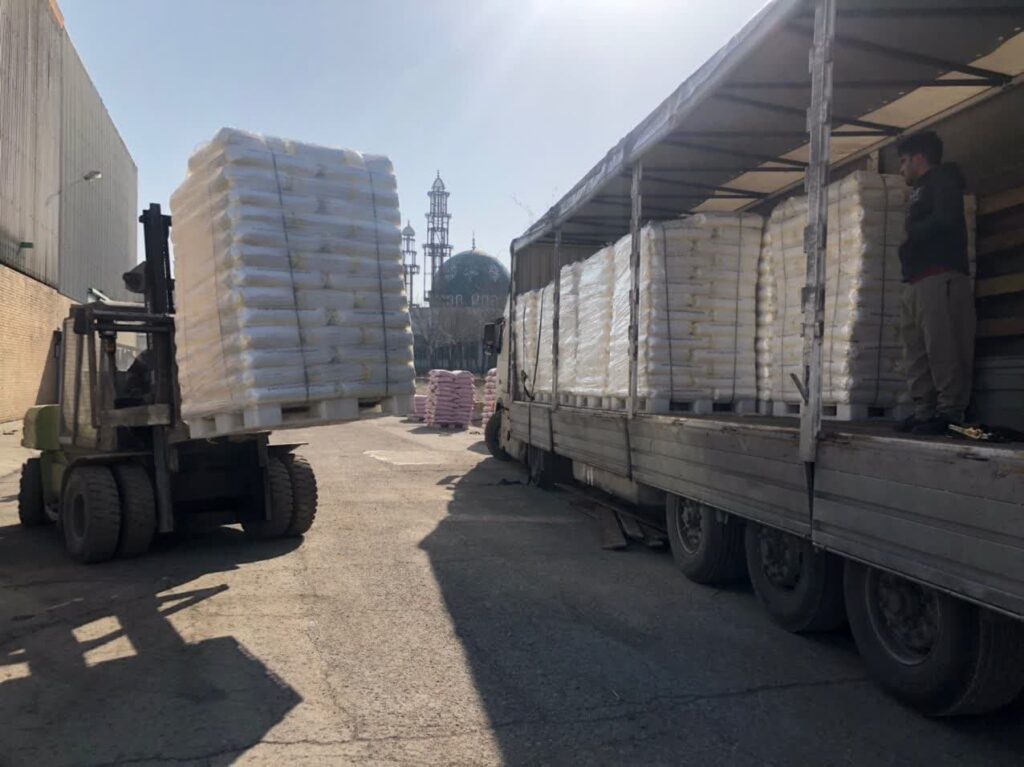
Polyethylenes are a group of the larger family of polyolefins, which are the highest among polymers in terms of production and consumption and are produced from the polymerization of linear monomers containing vinyl groups. Their three main types are:
1- Heavy polyethylene (HDPE)
2- Linear light polyethylene (LLDPE)
3- Light polyethylene (LDPE)
History: The first commercial polyethylene product was produced in 1940 from crude oil or natural gas. It is a thermoplastic material that varies from one type to another depending on the molecular structure. In fact, by changing the molecular weight (chain length), crystallinity (chain state) and its branching properties (chemical bond between adjacent chains), various products can be produced. The glass transition temperature is around -80 degrees Celsius and changes according to the polymer crystallization percentage. The structure of this polymer can be seen in Figure 1:

Physical, mechanical and chemical properties of polyethylene types: The properties of polyethylene are largely interdependent and are shown in Table 1:
Table 1: Physical properties of polyethylene types
Physical properties of HDPE LLDPE LDPE
MFI/MFR index/melt flow rate [gr/10Min] 0.25 to 20 0.9 to 50 0.2 to 30
Density [gr/cm³] 0.945 to 0.960 0.918 to 0.936 0.917 to 0.922
Crystalline percentage [%] 70 to 80 35 to 60 35 to 55
Molecular mass x 103 96 to 500 96 to 500 28 to 87
Oxygen permeability × 1016 [cm³.cm/cm2.s.Pa] 625 1920 2082
Moisture permeability × 1011 [cm³.cm/cm2.s.Pa] 1.37 4.06 4.37
Softening temperature [°C] 120.6 to 130 86.1 to 120.6 80.6 to 102.2
Melting temperature [°C] 134 116 113
Chemical resistance good good good
Finally, the most important chemical properties of these polymers are:
– Non-polar and saturated hydrocarbon with high molecular mass having chemical properties similar to paraffin
– Crystal shape due to structural symmetry; Increasing density and mechanical and chemical stability by increasing crystallinity
– High chemical stability
– Solubility in aromatic hydrocarbons such as toluene and xylene or chlorinated solvents such as trichloroethane or trichlorobenzene at a temperature higher than ambient temperature
– No water absorption
– Low permeability of polar gases and water vapor and high permeability of oxygen and carbon dioxide
– becoming brittle when exposed to sunlight; Using carbon black as an ultraviolet ray stabilizer
– Slow burning with a blue flame and the smell of paraffin
– Printability only if corrected

Production and processing process: Through the use of catalyst and changing the polymerization method of this material, various properties such as density, melt flow index (MFI), crystallinity, degree of branching and reticulation, molecular weight and molecular weight distribution can be controlled. Polymers are processed and shaped using an extruder. The different parts of the extruder are shown in Figure 3:

Types of polyethylene: one of the most important properties of polyethylene is their density, according to which they are classified according